The World’s Best Dining Table Surface: A Material Revolution in Luxury Furniture
When investing in a luxury dining table—a piece that will anchor your home for decades—the choice of surface material deserves careful consideration. It’s a decision that affects not just aesthetics, but daily life, maintenance requirements, and long-term satisfaction. While traditional materials have dominated luxury furniture for centuries, a quiet revolution is reshaping what discerning homeowners expect from their dining tables.
The Enduring Appeal of Traditional Materials
Real marble has captivated designers and homeowners for millennia. Its natural veining, cool touch, and undeniable prestige make it a compelling choice. Each slab is genuinely unique, carrying geological history within its surface. Wood, equally treasured, brings warmth and organic character that feels inherently inviting. A beautifully grained walnut or oak table connects us to nature and craft traditions spanning generations.
Glass offers its own distinct advantages: visual lightness, contemporary elegance, and the ability to make spaces feel larger. These materials have earned their place in luxury interiors through centuries of proven beauty.
Yet beauty alone doesn’t tell the complete story. In daily use, these traditional materials reveal limitations that challenge their suitability for modern luxury living. Real marble, despite its prestige, is surprisingly vulnerable. Its porous nature means acidic foods and drinks (wine, citrus, vinegar) can etch the surface permanently within minutes. Coffee rings become lasting reminders of casual moments. That Carrara marble centrepiece requires constant vigilance and immediate attention to spills, transforming what should be a relaxed gathering space into a source of anxiety.
Wood presents different challenges. It expands and contracts with humidity changes, potentially warping or splitting over time. Hot serving dishes leave marks. Water rings from condensation become permanent badges of use rather than living. Even premium hardwoods require regular maintenance: oiling, refinishing, careful protection from heat and moisture. The patina some celebrate as character, others experience as progressive degradation of their investment.
Glass, whilst easy to clean, shows every fingerprint and smudge. It’s prone to chipping and scratching from daily cutlery use. The cool, hard surface lacks the tactile warmth many seek in a dining environment. And despite modern treatments, the risk of catastrophic breakage (however unlikely) remains a consideration.
Alternative Materials: Falling Short of Luxury Standards
Engineered quartz emerged as a supposedly superior alternative, marketed as combining beauty with durability. Initially popular in kitchen worktops, some manufacturers positioned it for dining tables. However, quartz carries significant concerns. The material contains high levels of crystalline silica, and cutting or processing it creates dangerous dust linked to silicosis, a serious lung disease. Several European countries are considering restrictions or outright bans on certain quartz products due to these health and safety concerns during fabrication and installation.
Beyond health considerations, quartz lacks the authentic lustre and depth of natural stone. Under certain lighting, its engineered nature becomes apparent. Heat resistance is limited; hot dishes can cause discolouration or even cracking. For a luxury dining investment, these compromises are difficult to justify.
Solid surface materials like Corian offer seamless integration and repairability, but they scratch relatively easily and can be damaged by heat. A hot casserole dish placed directly on the surface may leave permanent marks. The material also lacks the visual depth and authenticity that luxury dining tables demand. In hospitality settings where durability matters most, these materials have proven inadequate for high traffic use.
Porcelain Stoneware: Engineering Meets Luxury
Porcelain stoneware represents a fundamental rethinking of what a luxury table surface can achieve. Created through firing natural clay and minerals at extreme temperatures exceeding 1,200°C, the process creates a material that’s essentially glass hard and completely vitrified. The result is a non-porous surface with extraordinary properties.
The technical specifications tell part of the story. Porcelain stoneware achieves 7 to 8 on the Mohs hardness scale, harder than granite and far exceeding marble’s rating of 3 to 4. This translates to exceptional scratch resistance in daily use. It holds Class 5 certification for stain resistance under ISO 10545-14, the highest possible rating, meaning even aggressive staining agents cannot penetrate the surface. NSF® certification confirms its suitability for food contact surfaces, meeting stringent hygiene standards.
But specifications only matter if they translate to real world performance. Here, porcelain stoneware excels dramatically. The surface withstands temperatures up to 300°C without damage: hot serving dishes, oven to table cookware, even a briefly misplaced hot pan cause no harm whatsoever. Red wine, coffee, olive oil, tomato sauce (substances that permanently stain marble) simply wipe away from porcelain stoneware without trace. The non-porous surface means bacteria cannot penetrate or survive, making it genuinely hygienic without special treatments or sealants.
Unlike natural marble, which requires regular sealing and careful maintenance, porcelain stoneware needs nothing beyond regular cleaning with standard household products. No special treatments. No periodic refinishing. No anxiety about what might damage it. The surface you install remains flawless indefinitely.
Design Freedom and Choice
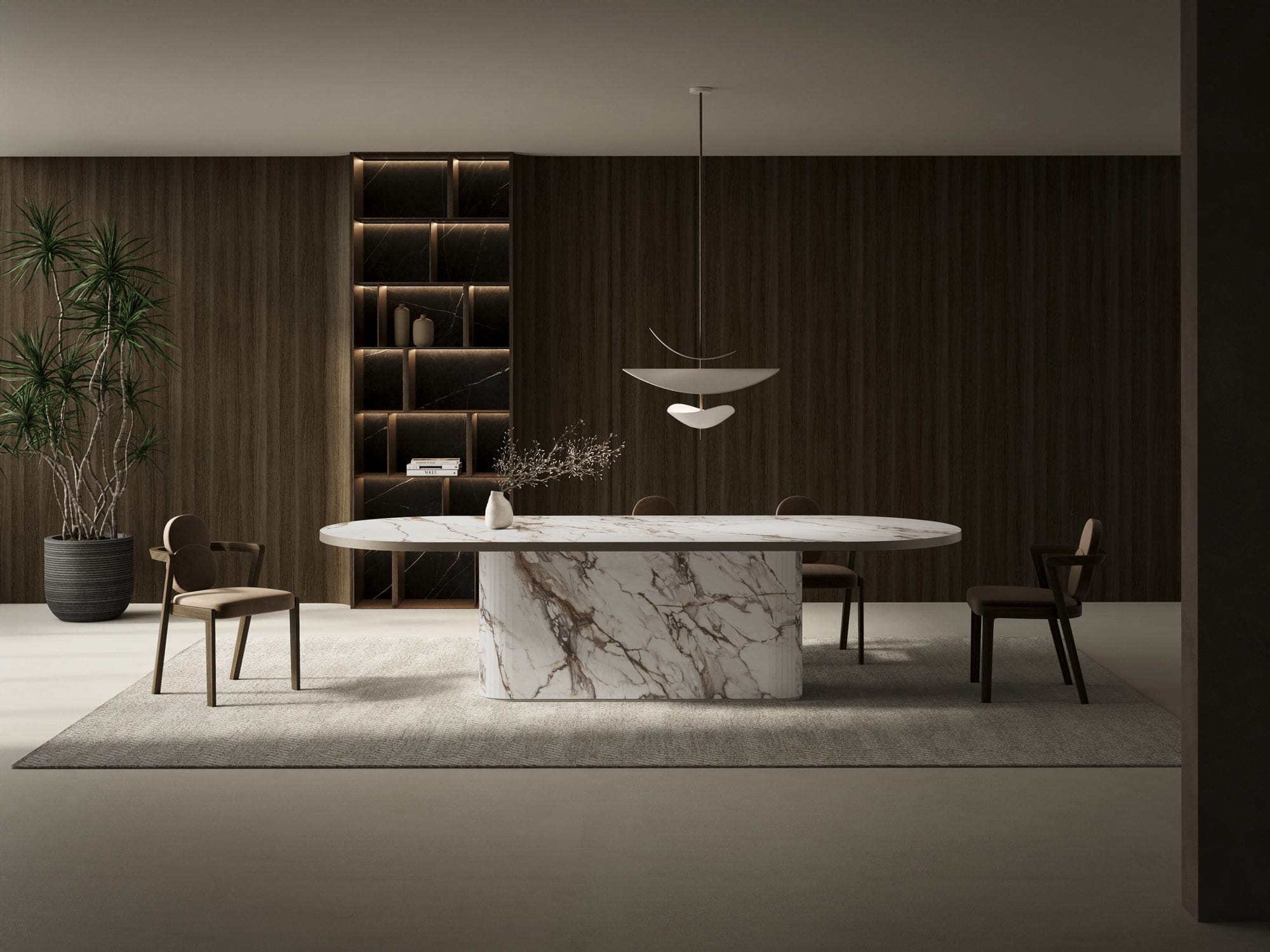
Beyond performance, porcelain stoneware offers design possibilities that traditional materials cannot match. Premium Italian manufacturers have perfected the art of capturing marble’s depth, veining, and lustre, often surpassing natural stone’s visual impact whilst eliminating its vulnerabilities. Want the drama of Calacatta marble without the maintenance anxiety? Porcelain stoneware delivers. Prefer the warmth of travertine or the contemporary edge of concrete? All available, with perfect consistency and durability.
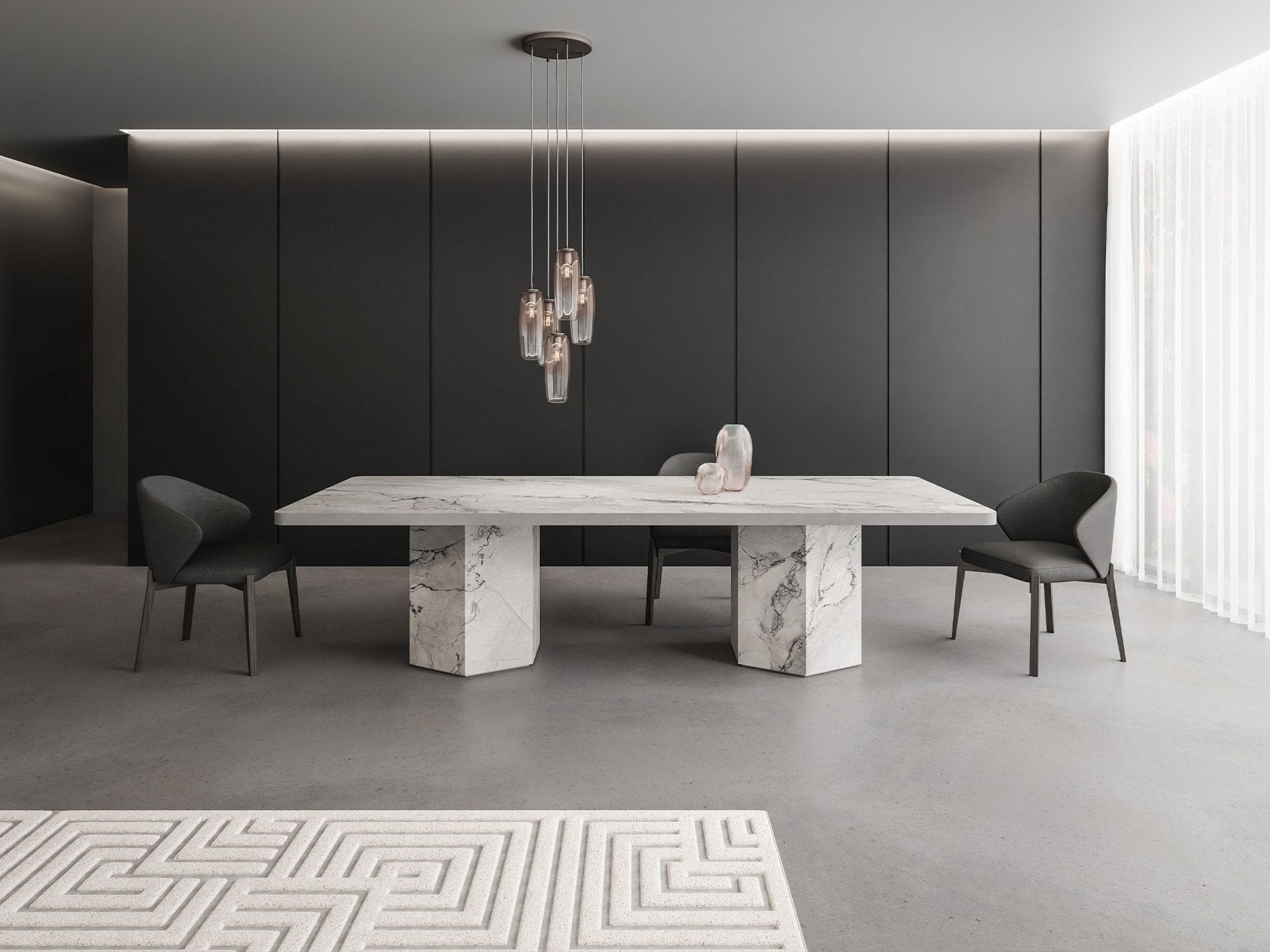
Larger tops up to 120cm x 300cm enable seamless surfaces impossible with natural stone’s size limitations. Tables can span impressive dimensions without visible joints, creating uninterrupted visual flow. Book matching (where adjacent slabs mirror each other) creates symmetrical patterns that amplify visual drama beyond what random natural stone can achieve.
The colour and finish range extends from high polish lustre to textured surfaces that feel authentically stone like. This flexibility means porcelain stoneware adapts to any interior aesthetic (traditional, contemporary, or transitional) without compromise.
The Behaviour Change: Living Without Worry
Here’s where porcelain stoneware reveals its most profound advantage. Owners of marble or wood tables develop protective behaviours: coasters become mandatory, tablecloths essential for dinner parties, serving dishes require trivets, and spills demand immediate action. The table, rather than facilitating relaxed gatherings, creates constant low level anxiety about potential damage.
Porcelain stoneware eliminates this entirely. The first time you wipe away red wine that would have permanently stained marble, something shifts. When hot dishes leave no mark, when daily use produces no visible wear, your relationship with the table transforms. You stop worrying. The table becomes what it should be: a gathering place without restrictions, a surface that serves rather than demands service.
This behavioural change is subtle but significant. Families with porcelain stoneware tables report actually using them more freely. Children can do homework without protective mats. Casual meals happen directly on the surface. The table becomes integrated into daily life rather than reserved for special occasions when extra care can be taken.
The Hospitality Reality Check
In restaurants and hotels (where tables endure intensive daily use) the limitations of traditional materials become impossible to ignore. Restaurateurs increasingly report dissatisfaction with marble tables that develop permanent staining despite careful maintenance. Some high end establishments have faced the costly embarrassment of replacing expensive marble tables within months of installation because customer complaints about stained or etched surfaces mounted.
Table retailers confirm this trend, reporting increased returns of marble topped tables from hospitality clients who discovered the material couldn’t withstand professional use. These aren’t budget establishments; they’re investing in luxury furniture and finding traditional materials fail to deliver adequate durability.
Porcelain stoneware, by contrast, maintains its appearance indefinitely in demanding hospitality environments. High end restaurants in London, Paris, and Milan have adopted it specifically because it delivers uncompromising luxury appearance with commercial grade durability. What works in a Michelin starred restaurant certainly suffices for residential use.
The Intelligent Choice
Porcelain stoneware doesn’t merely compete with traditional luxury materials; it surpasses them in nearly every practical measure whilst matching or exceeding their aesthetic impact. It’s not about compromise or accepting “almost as good.” It’s about recognising that engineering and craftsmanship have created something genuinely superior.
The material’s advantages compound over time. A marble table requires increasing maintenance as years pass. A porcelain stoneware table maintains its day one appearance indefinitely. The initial investment protects itself through durability that makes replacement unnecessary. For discerning homeowners who value both beauty and intelligent design, the choice becomes clear.
Traditional materials earned their luxury status through centuries of use. They remain beautiful. But luxury has evolved. Today’s luxury means experiencing beauty without compromise: surfaces that perform as exceptionally as they appear, materials that enhance rather than complicate daily life, investments that remain pristine rather than showing age.
Porcelain stoneware represents this modern luxury standard. Once you’ve experienced the freedom it provides (the ability to truly live with your table without constant vigilance) returning to traditional materials’ limitations becomes unthinkable. That’s not just a material choice. It’s a lifestyle upgrade.